blue Rocks Boulder Field Hike And Photography
 My Blue Rocks
Hiking Buddy
It was more about taking a relaxing hiking trip than it was about giving the my camera's shutter a serious workout. you can easily get great photos of the Blue Rocks Boulder Field are numerous. Here' my story and the photos of the Blue Rocks photography.
The boulder fields stretch nearly 1 mile long and spans about 15 acres of land. It ranges from several dozen feet to a few hundred feet in width at its widest sections.
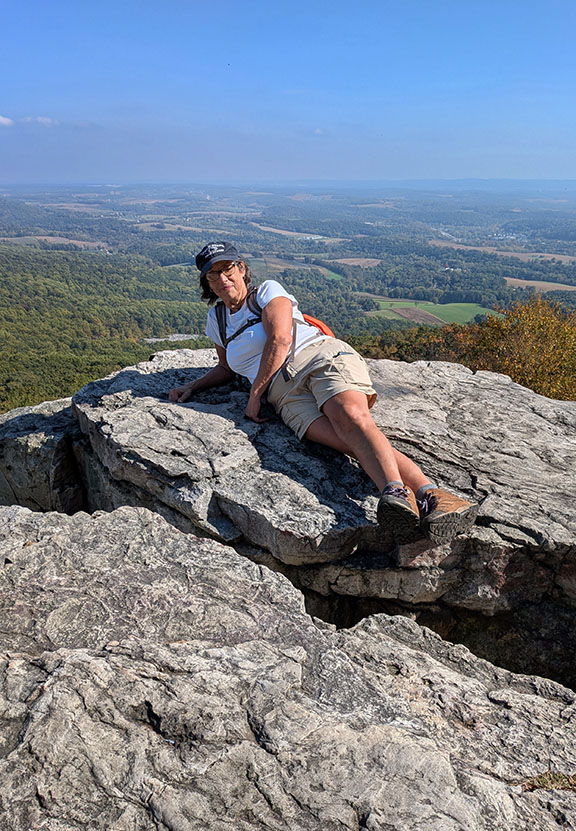
The hikes to both the Pulpit and the Pinnacle lookout vistas through the heavily wooded forest are gorgeous. This first photo in this post is of my most frequent hiking partner, my sister, posing on a sundrenched slab at the Pulpit. The fall colors were maybe just a week before their full color peak.
We started the Pulpit Trail hike with a quick view of the boulder slide form the road that crosses it near the bottom.
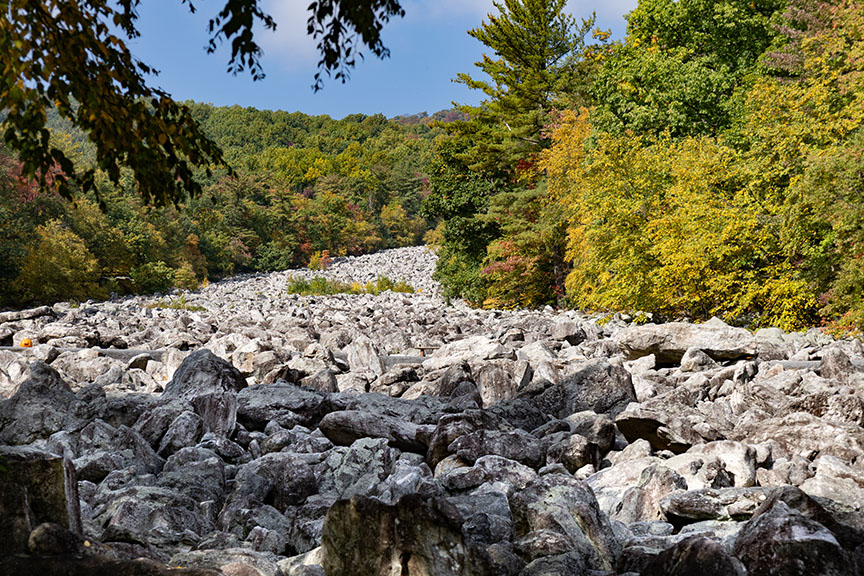
From the bottom the slide of boulders looks like it goes on forever as it curves slightly to the right.
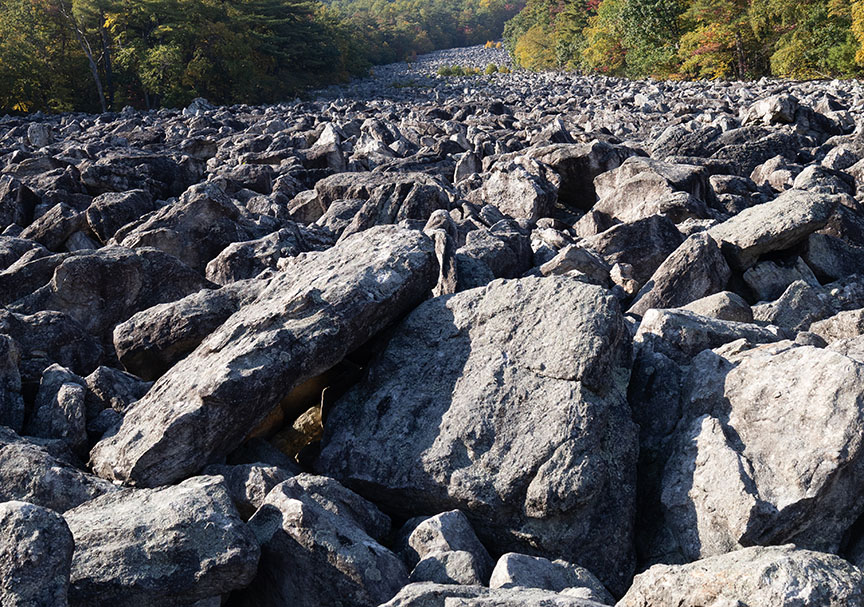 Blue Rocks Close-up
The rocks in this glacial slide are much larger than those found at the nearby Hickory Run in Pennsylvania, but tougher to scramble across due to there irregular sizes and angular shapes.
The pile of rocks that you can see is only the surface layer. On average, the boulders are 10 to 12 feet deep, creating a vast, hollow maze of stone, with a myriad of gaps and space
Hiking The Trails at Blue Rocks Campground
We hiked the Pulpit Trail out and back our first day and the Pinnacle Trail out and back our 2nd day. You can see from the map below that both trails originate at the Blue Rocks Campground.
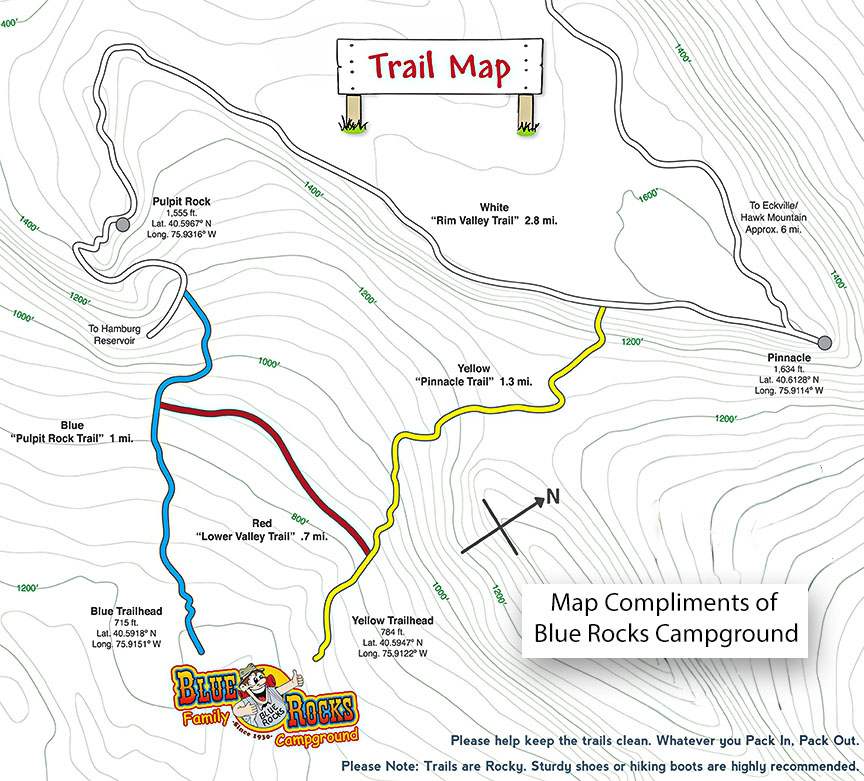 Blue Rocks Campground Trail Map
Both of these Blue Rocks trails connect with the Appalachian Trail (AT). For adventurist hikers with good fitness levels you can hike both in one day by making it a loop hike by using the section of the AT that connects the two.
Pulpit Trail Photos
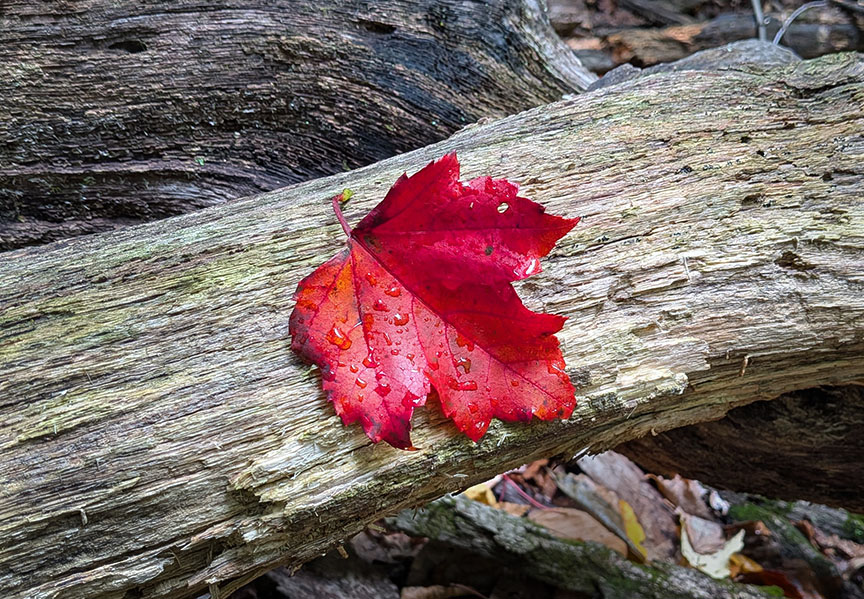
In addition to photographing the scenic vistas of these mountains you can always find close-up subjects for making interesting images.
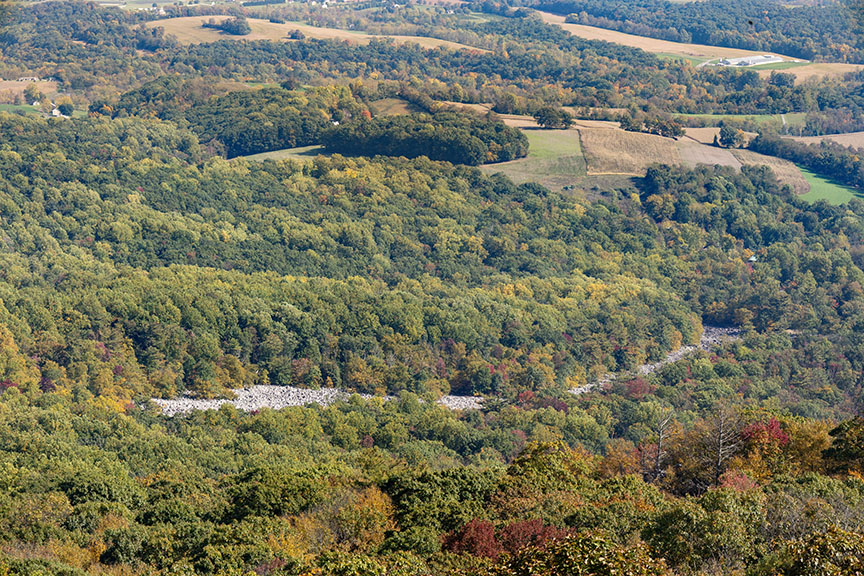 View of Boulder Field From Pulpit Trail
From the viewpoint of the boulder field on the Pulpit Trail it's hard to appreciate its length.
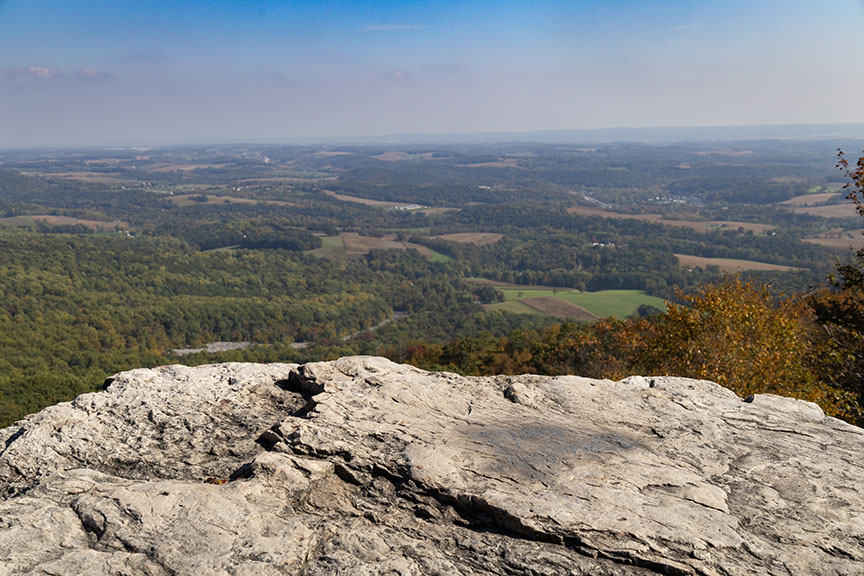 View From Pulpit Rock
The massive glaciers of the Ice Age didn't quite reach this exact spot, they stopped just a mile north.
The massive rock experienced severe, constant cycles of freezing and thawing (freeze-thaw and frost-heaving) between 15,000 and 20,00 years ago, which cracked the bedrock of Blue Mountain and slowly pushed the massive slabs downslope.
In the Pulpit Trail photo below I chose to compose the photo using a vertical orientation. I wanted to include the rock slab in the foreground, the nearby fall foliage, and the distant valley , and the sky to create a strong sense of depth in the image.
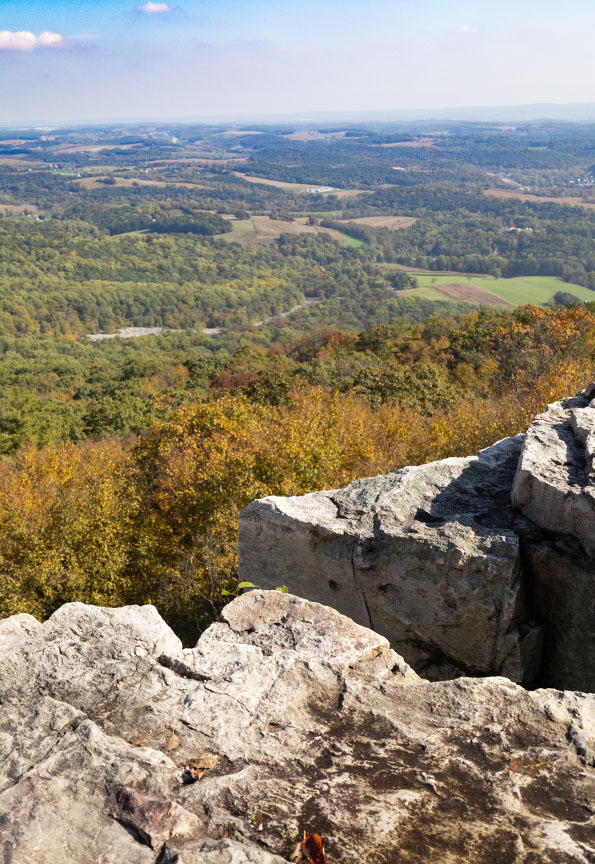 Blue Rocks Pulpit trail
Vertical Composition Photograph
Pinnacle Trail Photos
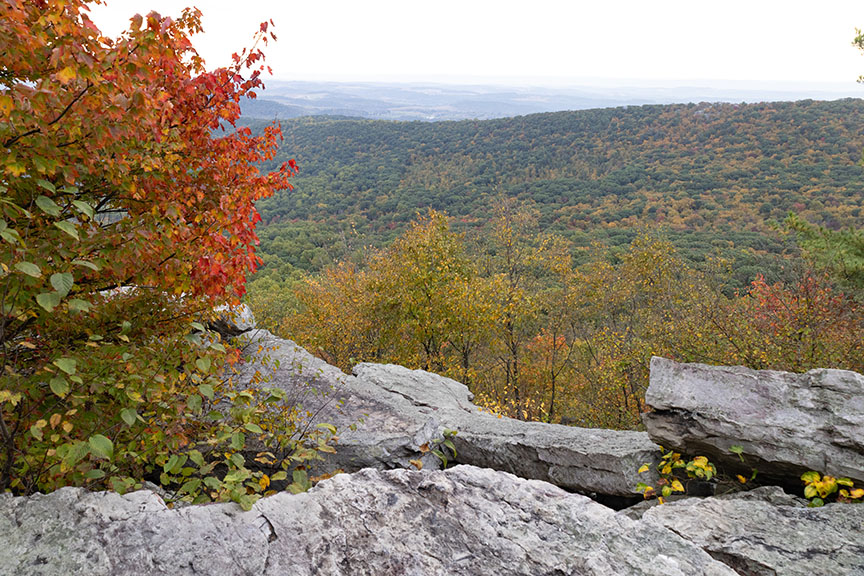 View From Pinnacle Trail
Including someone in your landscape photo adds scale and gives you more of an appreciation of the vastness.
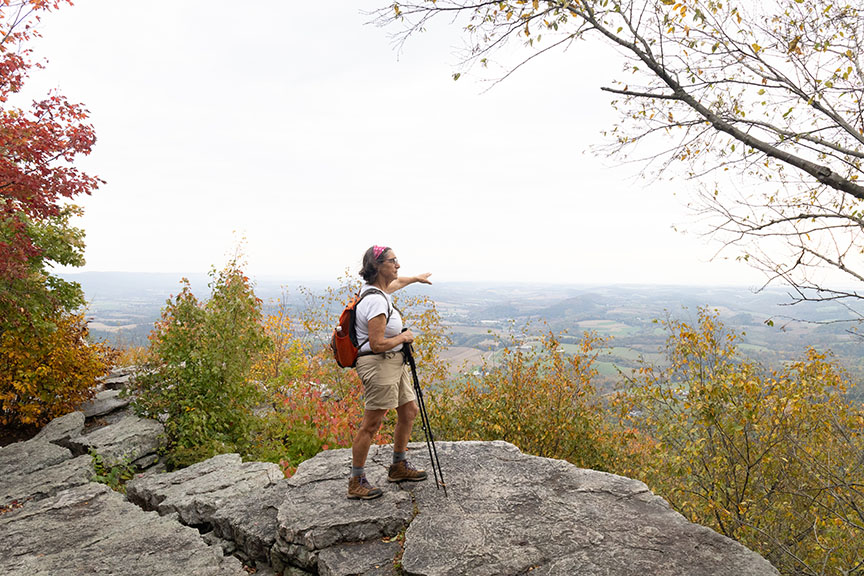 Pinnacle Trail Hiker
Don't forget to shoot some abstract type of photos as you explore the area for interesting subjects. In the photo below I was intrigued by the stark contrast between the weather-bleached dead tree and the pallet of fall colors surrounding it.
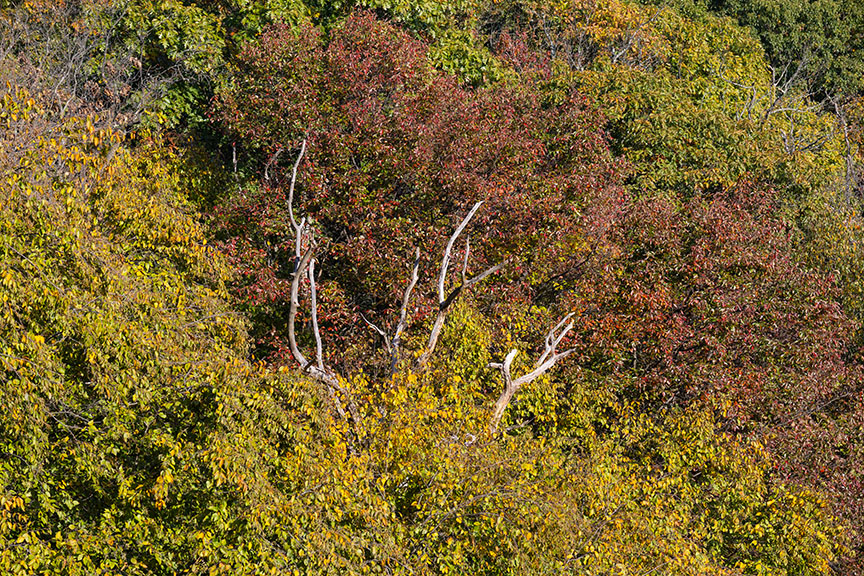 Pulpit Train View Abstract
Video of Blue Rocks Boulder Field
Here's a little bonus for those of you who would like to see a video of the boulders from the bottom. The video was shot by the Wandering Woodsman.

Bruce Lovelace is the publisher of TravelingPhotographer.com. Bruce shot portraits full time for over 35 years. Now he shoots more travel photography. Read more about him on the About Page. He also publishes how to articles and camera gear reviews at the Photography Tips and Canon Geek websites.
The Traveling Photographer Location on Google My Business
You might like these
Travel Photos at Penn State. Photography Of The Happy Valley campus
Travel photography by Bruce Lovelace-The Traveling Photographer. Travel photos at Penn State University and Happy Valley
Help Me Choose! A Decade of Dazzling Ricketts Glen Waterfall Photos
Photos of Ricketts Glen's Cascading Jewels. 10 years of looking through the lens. Vote for Ricketts Glen's Most Stunning Waterfall Photo
Through the Lens at Longwood Gardens: A Photographer's Paradise
A Peaceful Escape: Stunning large photos from Longwood Gardens. Feast for the eyes. Photo tour of Longwood Gardens. Tips on how to take stunning Longwood photos





© 1993-2026 All images and content are copyrighted
The Traveling Photographer - 124 Magnolia Ave. Pitman NJ 08071